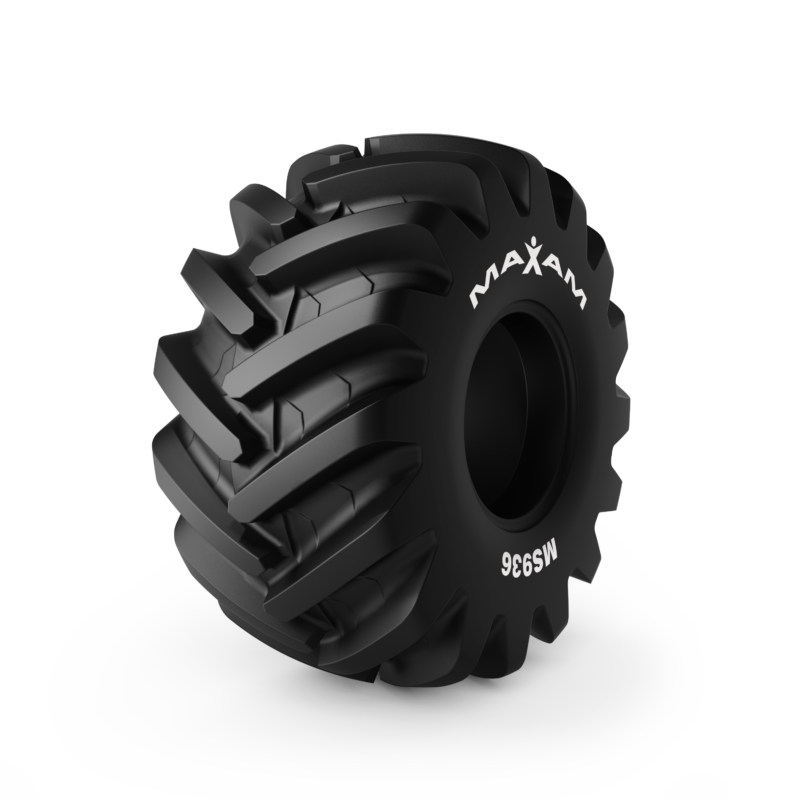
Cut-to-length forestry systems, forwarders and harvesters, place different demands on tires than conventional skidder-based logging. CTL machines carry heavy, concentrated loads directly over the tire, especially forwarders hauling cut logs, and operate on the same forwarding trails repeatedly.
That changes the priorities for load capacity, flotation, and sidewall protection compared to a standard forestry tire built primarily for drag and traction.
What is a CTL Logging System? How Does it Differ From Conventional Logging?
Cut-to-length logging fells, delimbs, and cuts trees to length at the stump using a harvester, then carries the processed logs out of the woods using a forwarder. Conventional or whole-tree logging works differently: a skidder drags full trees to a landing rather than carrying cut logs on the machine itself.
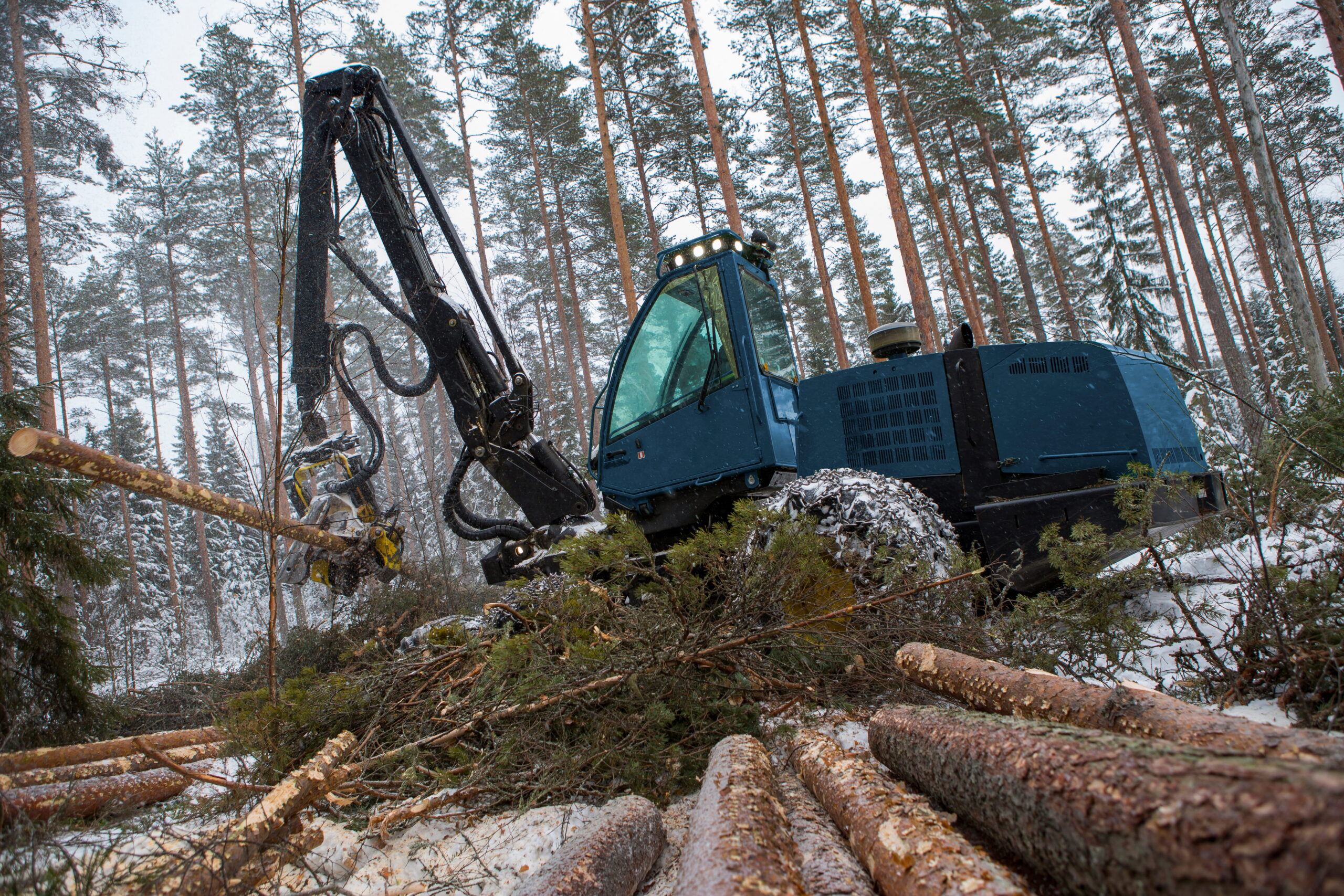
That distinction matters because it changes how the machine interacts with the ground. A forwarder carries its load on the machine rather than dragging it. A harvester is a stationary-heavy machine that pivots and processes wood in place rather than moving continuously across the site.
Why Do CTL Forestry Tires Need to Carry More Than Standard Forestry Tires?
A forwarder carries its entire payload directly over the axles, unlike a skidder where much of the load is dragged and partially supported by the ground. This means CTL tires, especially forwarder tires, need substantially higher load index ratings than tires built for drag-based logging.
That higher load requirement changes carcass construction, including ply rating and load capacity, at the design level. Under sizing a CTL tire’s load rating leads to accelerated sidewall and casing failure, along with tread wear.
How Repeated Trail Use Changes CTL Tire Design
CTL operations often run the same forwarding trail dozens of times per harvest, unlike a skidder, which may vary its path more. Repeated passes on the same trail concentrate rutting and compaction risk in one location rather than spreading it across the site.
- Concentrated compaction risk. The same trail bears repeated passes, so ground pressure management matters more per pass than in single-pass skidding.
- Flotation as a repeated-use requirement. Wide, low-pressure flotation tires reduce cumulative rutting depth across dozens of passes on the same path.
- Trail life and productivity. A trail that deteriorates mid-season slows every subsequent forwarder pass, directly affecting harvest productivity.
A trail that ruts out mid-harvest does not just cost the operation trafficability later in the season. It increases fuel use for every subsequent pass and can create compliance issues under sustainable forestry certification standards tied to soil disturbance. This is why flotation carries more weight in CTL tire design than it does for a standard forestry tire.
What Tread Design Considerations Are Specific to CTL Machines?
Forwarders and harvesters need tread that balances traction for loaded travel with minimal trail disturbance, a different balance than a skidder tire, which is optimized more heavily for straight-line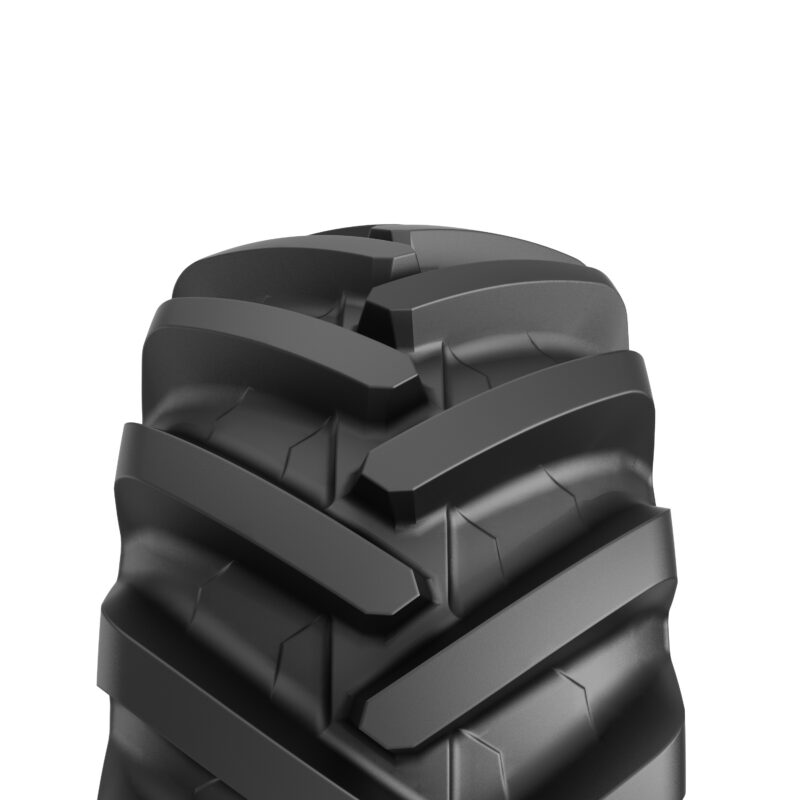
CTL tread patterns often favor a wider, flatter lug profile for load-bearing stability over the deep, narrow lug geometry built purely for drag traction. The forwarder is not fighting to pull a load through the woods. It is carrying that load and needs the footprint to match.
Introducing the MAXAM MS934 for Cut-To-Length Operations
The MS934 is engineered specifically for CTL forwarders and harvesters, delivering the load capacity, flotation, and sidewall protection that cut-to-length operations demand.
- Increased shoulder lug width for stability

- Heavy-duty sidewall and shoulder for cut and impact protection
- Cut-resistant compound for forestry service
- Steel-reinforced undertread
- Extra-wide footprint for flotation in muddy and wet conditions
- Nylon-wrapped bead to prevent unwinding
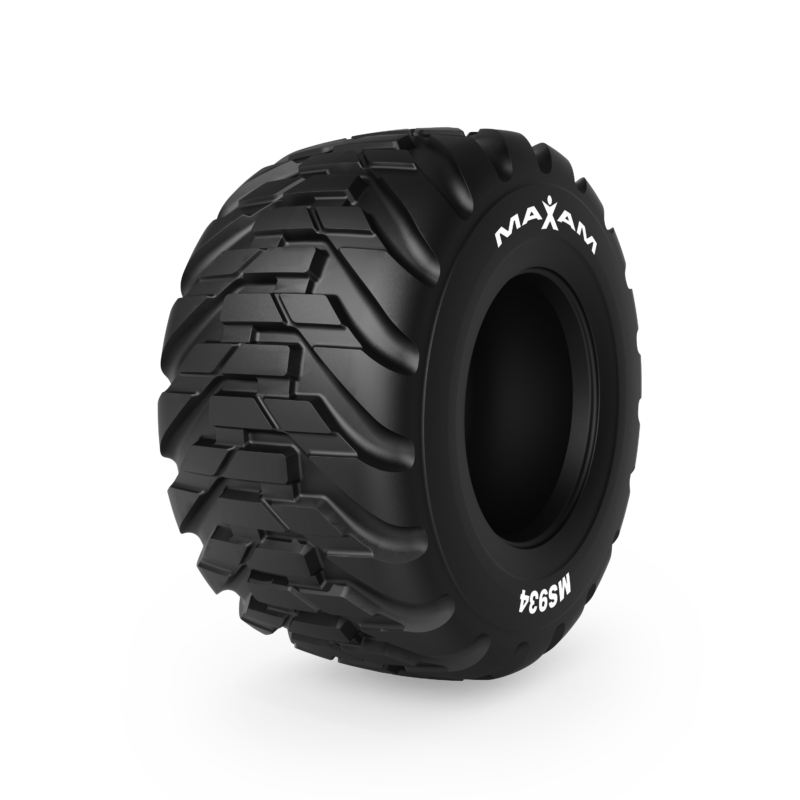
It also features a unique tread design that accommodates tire chains, a critical consideration for CTL machines in steep or icy terrain. Operators add traction without compromising tire integrity.
Talk to your MAXAM dealer about whether the MS934 fits your equipment and operating conditions.
Frequently Asked Questions
Common questions regarding cut-to-length forestry, tires, and more.
Can a standard forestry tire be used on a CTL forwarder?
It’s not recommended for regular use. A standard forestry tire’s load index and sidewall construction are typically built for drag-based loading rather than the full, sustained axle load a forwarder applies, which increases the risk of premature casing and sidewall failure.
What TRA code applies to CTL forestry tires?
CTL forestry tires generally fall under forestry-specific tread and load designations rather than standard L or E grades used in construction, reflecting their combination of high load index and flotation-focused tread design.
Do CTL tires need higher inflation pressure than skidder tires?
Not necessarily higher, but the correct pressure is more critical given the sustained axle load. Pressure should be set to the manufacturer’s load-inflation table for the tire’s rated capacity instead of estimating from another tire.
Talk to your MAXAM dealer about which CTL tire matches your equipment, your trail conditions, and the load your forwarder or harvester carries.