MAXAM on Ag Tire Construction & Which is Best For Each Application
AG Technical Bulletin – Do you have preference on nylon or polyester construction, what is the difference between all steel and steel belt carcass/casing, what applications do you recommend for each, and what are the specific performance attributes producer should look for with each type of construction?
The global tire market today is broken into segments determined by equipment, application, and use. As a rule, the largest global equipment segments are the passenger vehicle and commercial trucks, accounting for well over 85% of all tires sold annually. In these segments, radial tires make up 99% of carcass construction. In comparison, the specialty-equipment market that includes construction, mining, agriculture, aviation, and motorcycle/bicycles includes both radial and bias-ply carcass constructed tires. The primary difference between radial tires and bias-ply tires is in the tire carcass and the material construction of the tires. Below are examples detailing the differences between the two types of tire construction:
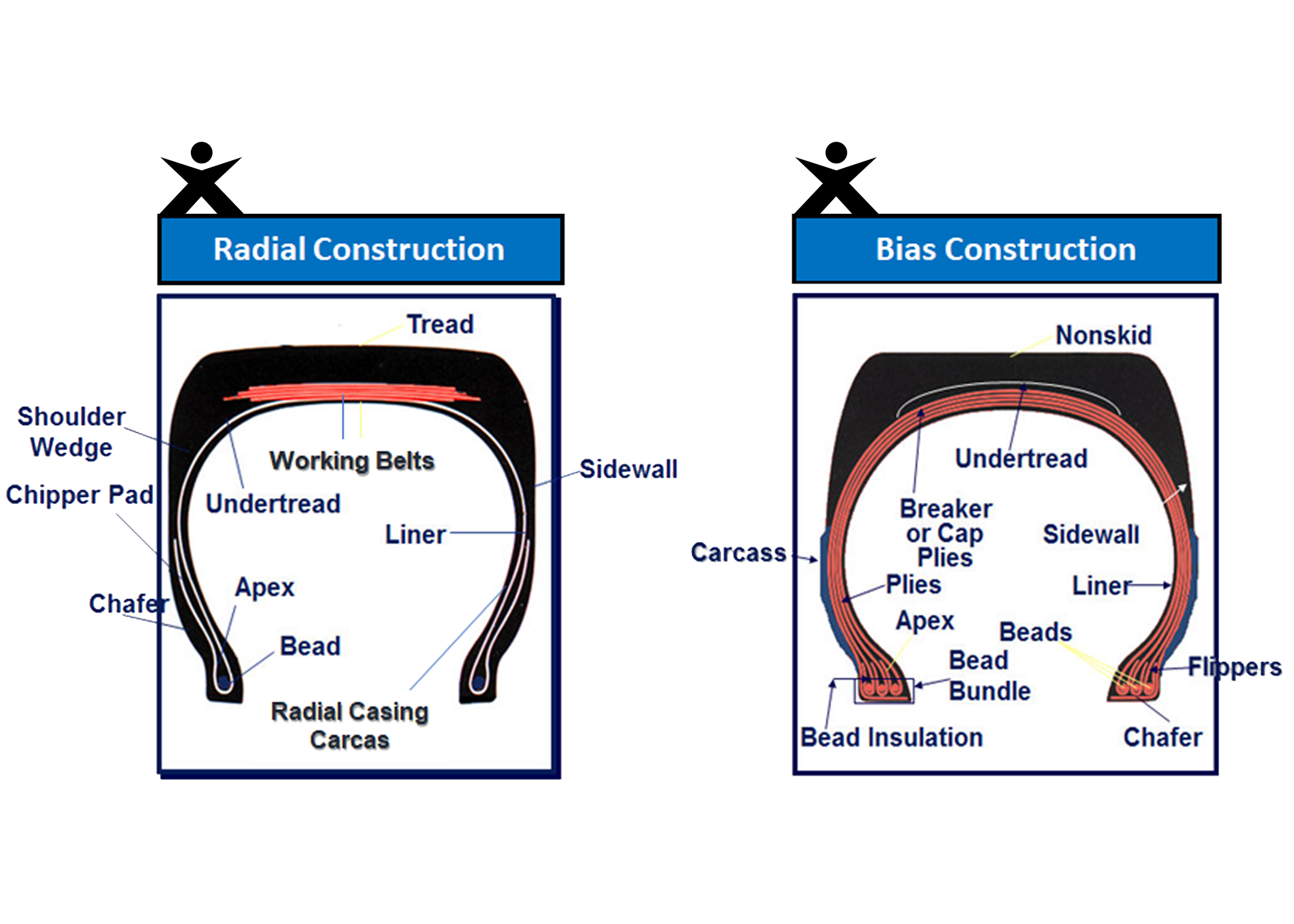
The key difference between the two types of construction is how the radial tire uses the single radial casing as a spring mechanism to push the working belts onto the working surface. This ensures a uniform contact patch or contact area for the tire tread to deliver both the necessary traction and friction to carry the required load in any direction under power. In the case of bias-ply constructed tires, which reflect tire design concepts from over 100 years ago, the carcass is made up of multiple plies of material that function as a single unit like a balloon to push the tread onto the surface area. Under a working load both tires work very differently as to how the tread area or tire footprint will function to deliver the needed traction or friction to move a vehicle forward:
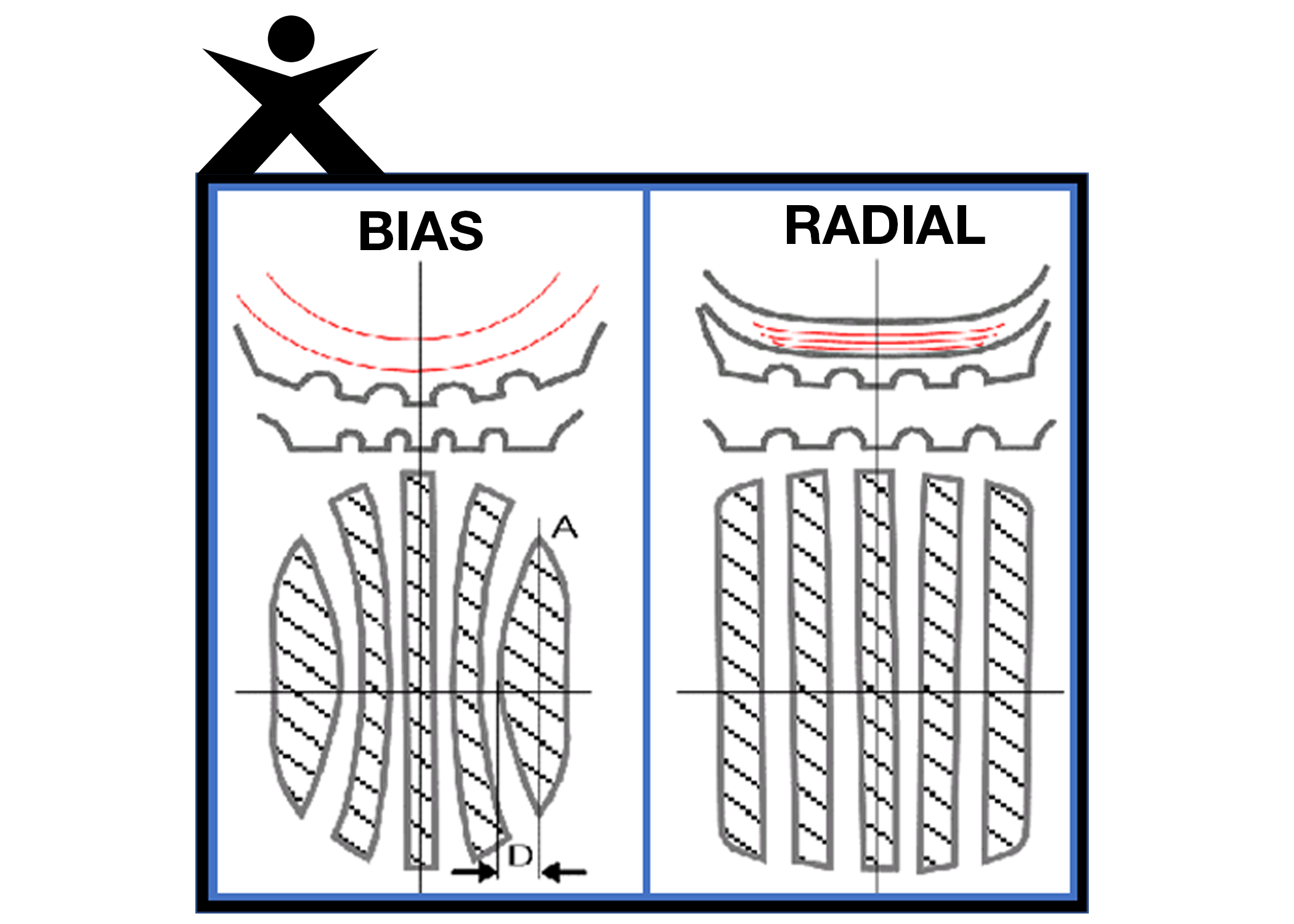
The key difference between the two types of construction is how the radial tire uses the single radial casing as a spring mechanism to push the working belts onto the working surface. This ensures a uniform contact patch or contact area for the tire tread to deliver both the necessary traction and friction to carry the required load in any direction under power. In the case of bias-ply constructed tires, which reflect tire design concepts from over 100 years ago, the carcass is made up of multiple plies of material that function as a single unit like a balloon to push the tread onto the surface area. Under a working load both tires work very differently as to how the tread area or tire footprint will function to deliver the needed traction or friction to move a vehicle forward:
| MAXAM Tire Construction | Casing Materials | Working Belts | Primary Reason | Featured Benefit and Application |
| Radial | Nylon Casing | Nylon Belts | Flotation, Traction, and Improved Grip | Reduced compaction, Improved fuel efficiency, and reduced ground slip for 4WD or MFWD Tractors |
| Radial | Nylon Casing | Steel Belts | Improved Traction and Load Carrying Capacity @ high Air Pressures | Uniform contact patch and high load-carrying capacity especially for Harvesters or Floaters |
| Radial | Steel Casing | Steel Belts | Very high load or very highspeed requirement | High road speeds that generate heat or high load capabilities like heavy transport tankers or trailers |
As agricultural machinery continues to grow in weight and engine horsepower, we are seeing an evolution of tires toward nylon radial casing with steel belts or steel casing with steel belts. MAXAM’s radial implement I3 FLOTXTRA line of tires are steel casing with steel working belts designed to meet the high speed and high load requirements of heavy towed implements or tanker-type trucks. In addition, we are seeing the migration of compact construction equipment into the ag world to carry out or support all the jobs that a farming operation requires. Over the last 25 years, we have seen skid steers and backhoes become integral parts of any farm or grower’s operation. New additions to the agricultural and rental equipment world coming to North America having been successfully employed in the European market are telehandlers, wheeled excavators, and compact wheel loaders. European agriculture is made up of smaller farms with tighter road restrictions that rely heavily on radial tires due to the high load and high transport speeds required.
As a result, MAXAM has developed new radial tire solutions optimizing both the tread and casing construction to deliver the value and performance that customers expect from Maxam Tires:
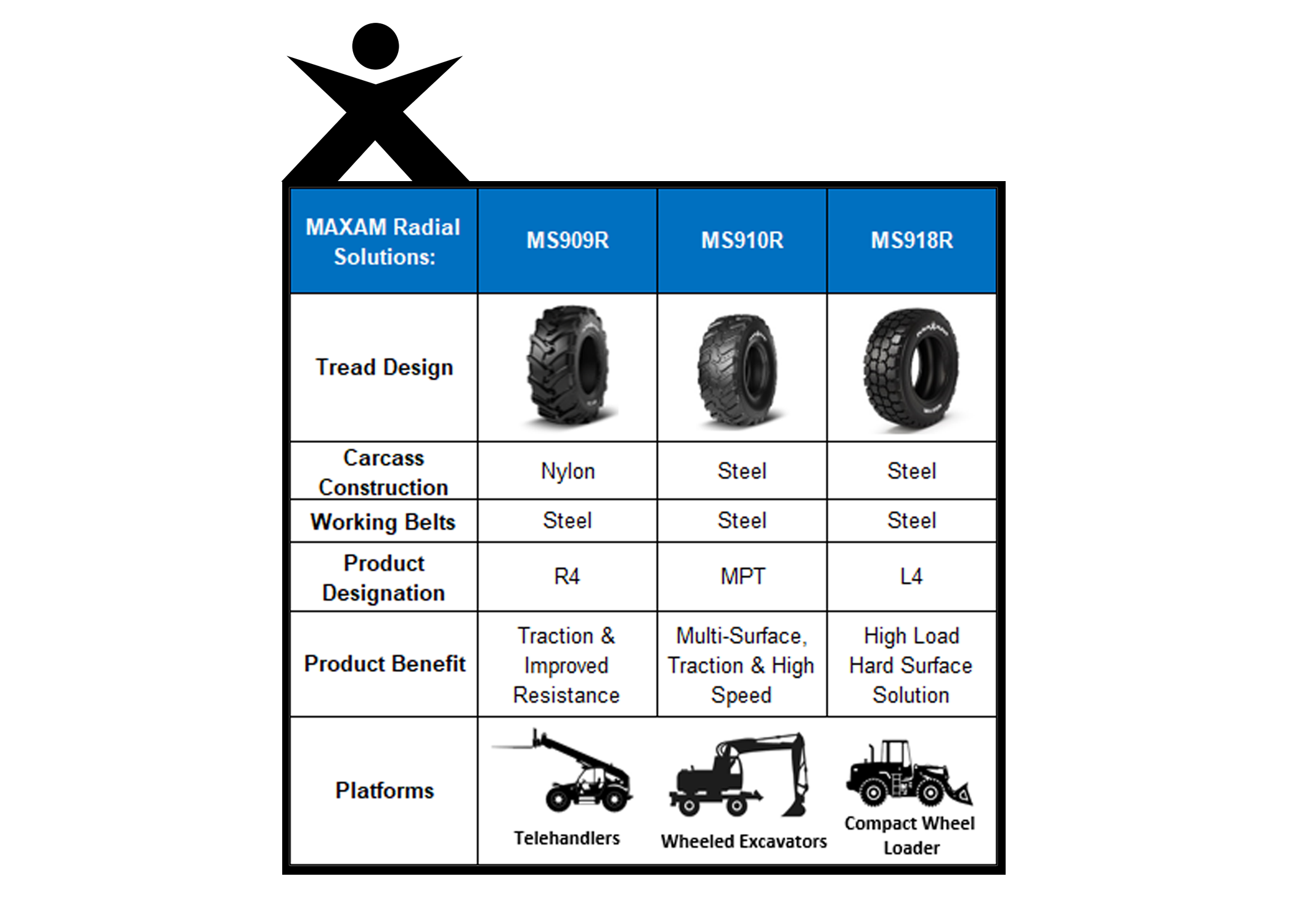
MAXAM radial agricultural and construction tires have been developed to deliver performance in any working condition worldwide. Our objective is to bring to market radial products in the right sizes, with the right load capabilities, that when operated at the right air pressure will deliver the value and performance our customers expect from MAXAM. Backed by a world-class warranty program, our radial tires are manufactured to maximize performance, reduce compaction, improve traction, and increase your productivity! Try the MAXAM advantage in your operations today!