As forklift technology transforms modern material handling fleets, energy efficiency has become a competitive advantage. While battery technology and charging infrastructure receive significant attention, one critical factor often goes overlooked: your forklift tires.
Tires with lower rolling resistance outperform standard options across every metric that matters to your operation. They consume less energy. They last longer. They generate less heat. And they deliver measurable savings in downtime and operating costs.
This guide explains why low rolling resistance industrial tires are the superior choice for material handling applications and how MAXAM’s advanced rubber compound technology sets the new standard for performance.
What Makes Low Rolling Resistance Tires Better
Rolling resistance is the energy a tire consumes through internal friction within its materials. When a forklift operator moves heavy loads across the warehouse floor, the motor works continuously to overcome this resistance.
Standard tires waste significant energy through:
- Excessive friction in the rubber compound
- Poor heat dissipation that increases internal resistance
- Inefficient tread patterns that create unnecessary drag
- Suboptimal construction that flexes and squirms under load
Low rolling resistance tires minimize these energy losses through superior engineering. The result is a tire that works with your equipment, not against it.
Five Ways Low Rolling Resistance Tires Outperform Standard Options
Check out the top reasons low rolling resistance tires are the best option for forklifts:
1. Better Energy Efficiency
The most direct benefit of low rolling resistance is reduced energy consumption. When a tire requires less force to roll, your forklift’s motor draws less power.
For electric fleets running order pickers and counterbalanced trucks, this means:
- Extended battery life between charges
- Longer shift durations
- Reduced charging frequency
- Lower electricity costs
For operations using internal combustion equipment, the savings appear as improved fuel economy and reduced emissions. Every gallon of propane or diesel saved through efficient tires directly improves your bottom line.
2. Longer Tire Life
Low rolling resistance tires generate less internal friction, which directly reduces heat buildup. Heat is the primary enemy of rubber tires since it accelerates compound degradation, softens materials, and leads to premature failure.
By running cooler, low rolling resistance tires:
- Maintain compound integrity longer
- Resist abrasion and chunking
- Delay the onset of uneven wear
- Extend overall tire life by weeks or months
3. Reduced Downtime
Downtime is the hidden cost that erodes profitability in material handling. When tires fail, equipment stops. Loads sit. Schedules slip.
Low rolling resistance tires reduce downtime through:
- Lower operating temperatures that prevent heat-related failures
- Reduced stress on sidewall and tread compounds
- Better durability under continuous operation
- Fewer premature replacements
For recycling centers, transfer stations, and high-throughput warehouses, every hour of avoided downtime represents recovered productivity.
4. Improved Sustainability
Manufacturers producing high-quality low rolling resistance tires typically employ advanced rubber compound mixing technology. This often means:
- More efficient use of natural rubber and synthetic materials
- Reduced waste during manufacturing
- Lower carbon footprint throughout the tire lifecycle
- Compatibility with green building certifications
For fleets prioritizing sustainability goals, selecting the right tire with low rolling resistance aligns equipment choices with environmental objectives.
5. Better Performance Across Applications
Low rolling resistance isn’t a one-dimensional improvement. Tires engineered for minimal energy loss also tend to excel in other performance areas:
- Consistent traction on smooth surfaces and rough terrain
- Stable footprint for improved maneuverability
- Predictable handling for forklift operator confidence
- Reliable performance under heavy loads
How to keep Low Rolling Resistance Tires Performing at Their best
Even the best forklift tires require proper care to deliver full benefits. Implement these practices across your fleet.
Regular Tire Maintenance
Consistent tire inspection protocols catch problems before they escalate:
- Check for internal damage or separations
- Remove embedded debris from tread patterns
- Monitor for uneven wear indicating alignment issues
- Look for signs of heat buildup or compound degradation
Proper Load Management
Always respect load capacity ratings and ensure even load distribution. Excess pressure on individual tires:
- Increases rolling resistance
- Accelerates tread wear
- Generates unnecessary heat
- Reduces overall tire life
Wheel Alignment Verification
Misaligned wheels force tires to scrub against the direction of travel, dramatically increasing rolling resistance. Regular wheel alignment checks should be standard procedure.
Correct Tire Selection
Match your tire type to your specific application. Modern solid rubber tires dissipate heat better than polyurethane tires at higher speeds. Non-marking tires serve clean environments without sacrificing efficiency. Traction tires provide grip for operations involving ramps without excessive energy loss.
Here’s a simple, general guide that help get you started on selecting the type of forklift based on applications.

Examples of Low Rolling Resistance Tires
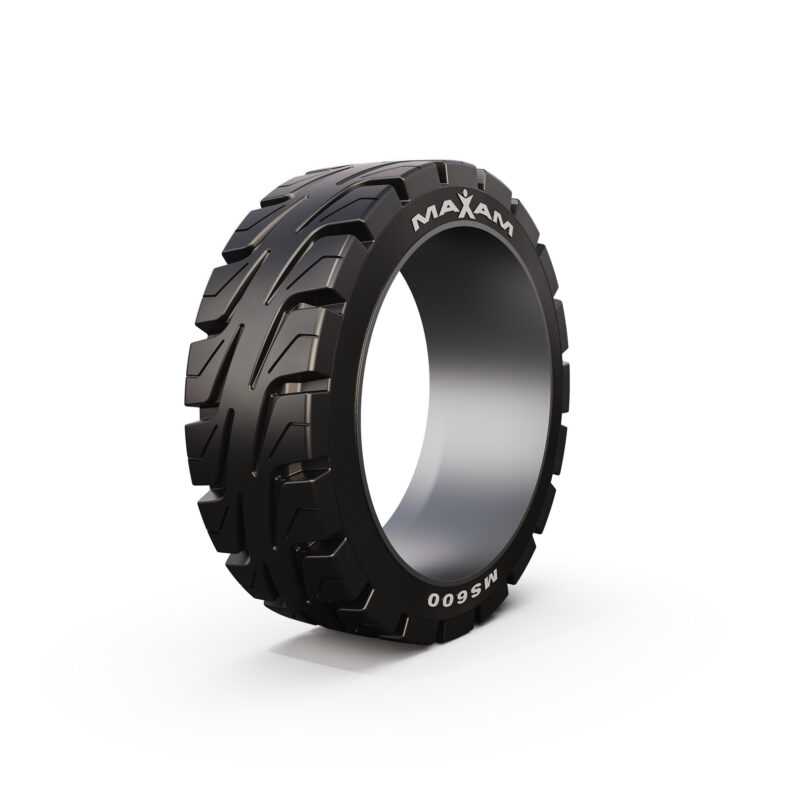
MS600
The MS600 is engineered to extract peak performance from forklifts. At its core is EcoPoint3, MAXAM’s advanced compounding technology that dramatically reduces rolling resistance, meaning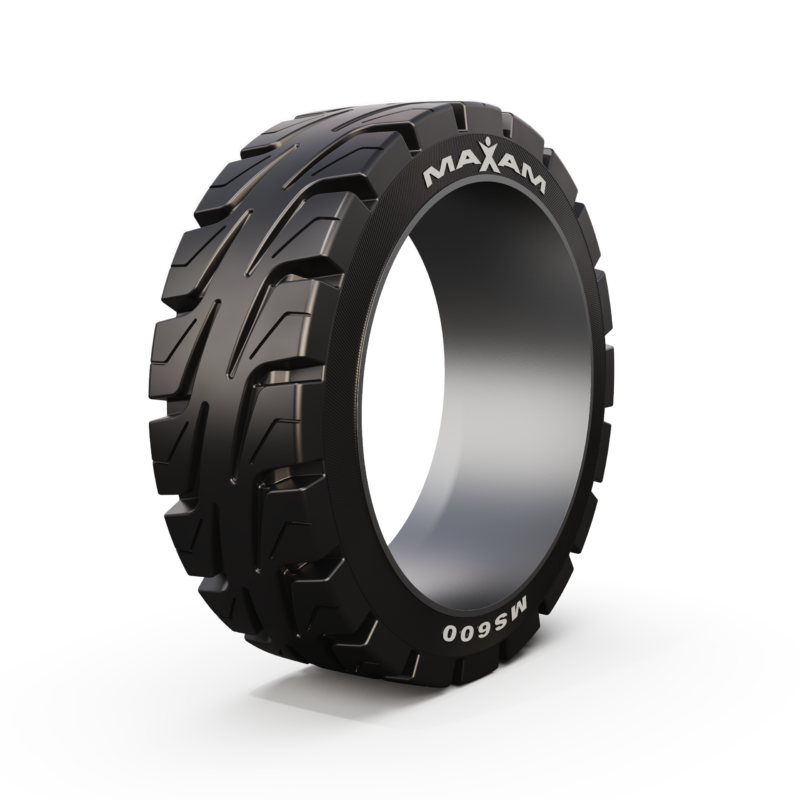
Less friction means less heat, and less heat means longer tire life and fewer battery swaps. The result is a solid resilient tire that maximizes uptime, lowers operating costs, and keeps your material handling fleet moving efficiently, hour after hour.
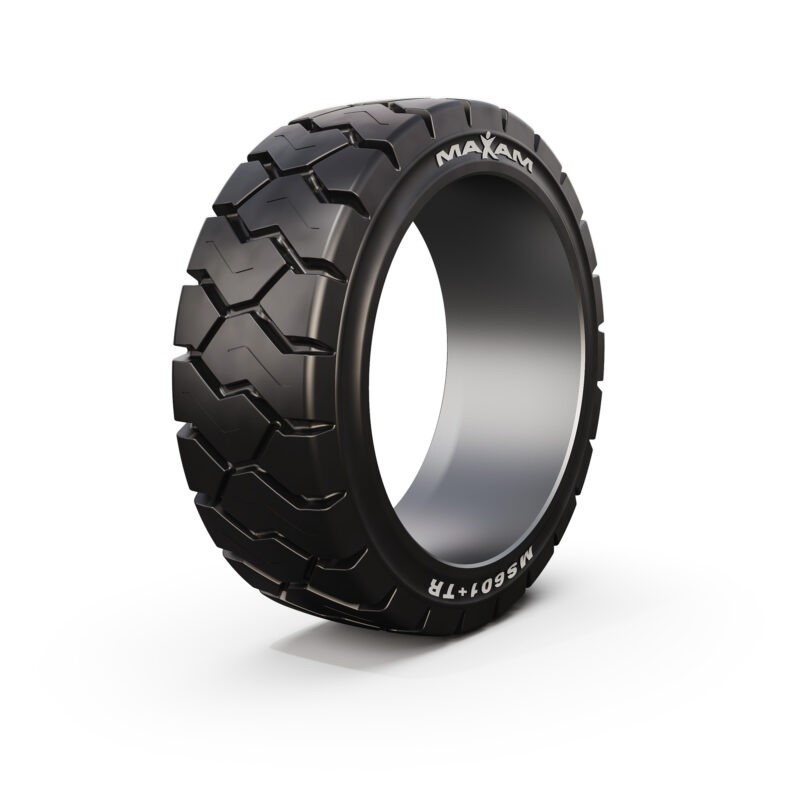
MS700
The MS700 takes the efficiency of EcoPoint3 and pairs it with a stable, three‑stage construction designed for heavy loads and demanding industrial applications. Low rolling resistance reduces energy waste, helping electric and internal combustion forklifts alike stretch their shifts further, while the advanced compound dissipates heat to protect against premature wear.
With a puncture‑proof solid design and tread that maintains grip on smooth warehouse floors or rougher surfaces, the MS700 delivers the durability and performance that high‑cycle operations demand, all backed by the science of EcoPoint3.
Better Tires Deliver Better Results
Low rolling resistance forklift tires are a strategic advantage for modern material handling operations. By choosing tires engineered for minimal energy loss, you gain:
- Reduced energy consumption and extended battery life
- Longer tire life through lower operating temperatures
- Less downtime from premature failures
- Improved sustainability metrics
- Better performance across all applications
Whether your operation requires press-on tires for indoor warehouses, solid pneumatic for recycling centers, or specialized non-marking tires for clean environments, MAXAM delivers low rolling resistance solutions engineered for superior results.
Ready to experience the difference? Contact your local MAXAM representative to discuss your specific material handling application and discover why low rolling resistance forklift tires are the better choice for your fleet.